The Oven has baked its last loaf. This blog is no longer being updated.

My cooking videos appear at youtube.com/janeragavan

I write on food at star2.com

Not-so-slow snail (bread)

Friday, April 12, 2013

COCONUT SAFFRON SNAIL BREAD 
These buns started out with a recipe for Sweet Saffron Bread from Dan Lepard's The Handmade Loaf. Besides saffron, the bread also contains currants and is formed into an "S" shape.
The loaf starts off with a sponge made with some of the flour, water and a little yeast, and then all the rest of the ingredients are added. I also mixed some boiling water with saffron as it would be added later.
After the sponge and saffron water were prepared, I took a look inside Tom Jaine's Making Bread At Home which has a recipe for Guatemalan Sweet Buns. This bread also starts off with a sponge before the final dough is mixed. No saffron or currants, but the buns are flavoured with aniseed and they contain a little more sugar than Dan Lepard's saffron bread. What I found interesting was the addition of coconut milk.
Both recipes looked awfully good, so what else could I do but combine the two!
I decided on rolls because they're easier to eat and I don't have to do any slicing before eating. (I'm lazy that way.) Instead of aniseed, I used cardamom.
The Guatemalan buns are coiled into a snail shape, or ensaïmada in Spanish, also the name for a famed sweet bread snack which is said to have originated from the island of Mallorca/Majorca, although there are versions in many other Spanish-speaking countries.
The dough was soft but easy to work with, the golden yellow was beautiful and I could smell the coconut milk, cardamom and vanilla in it. After it baked, however, none of the aromas were distinctive any more. But the buns were fluffy and I liked that little bit of sweetness in them. I used half the dough for cinnamon buns.
This has been submitted to YeastSpotting.
Make cinnamon rolls with the same dough
Sweet Coconut-Saffron Snail Bread
Makes 9 large rolls

Sponge
100g all-purpose flour
¼ tsp instant yeast
100g milk

Final dough
Pinch of saffron threads (about ½ tsp)
¾ tbsp boiling water
250g bread flour
25g sugar
¼ tsp salt
½ tsp cardamom powder
60g butter, divided
150g coconut milk
⅛ tsp vanilla extract
Snow or icing sugar

Mix the sponge ingredients in a bowl, cover and set aside for 1 hour.
Place the saffron threads in a small bowl and pour in the boiling water. Set aside for 10 minutes.
In a large bowl, stir the bread flour, sugar, salt and cardamom powder together. Rub in half the butter until well incorporated.
Hold back about 2 tbsp of coconut milk and stir the rest into the saffron solution with the vanilla extract. Add to the sponge and blend well. Stir this mixture into the dry ingredients until it all comes together into a rough dough. If there are dry spots, add the extra coconut milk. Cover the bowl and set aside for 10 minutes.
Stretch and fold the dough over itself a few times in the bowl and form into a ball; it should be soft but not sticky. Cover the bowl.
Do the stretching and folding three more times over an hour, forming the dough into a ball each time. Then cover the bowl and leave the dough to double in size, 1-1½ hours.
Melt the remaining butter. Place in a shallow bowl and cool.
Coiling the ropes into 'snail shells'
Divide the dough into nine even pieces and roll each one into a rope about 35cm long. Dip the whole length of the rope in the melted butter (or brush the butter on). Lay one end of the rope on a baking tray and coil it into a spiral, tucking the other end underneath. The middle section will be slightly higher than the edges. Do the same with the other pieces. Cover and set aside for about 20 minutes until slightly risen.
Meanwhile, preheat the oven to 180°C. Bake the rolls until the tops are golden, 20-25 minutes.
Remove from oven and cool for five minutes, then dredge heavily with snow or icing sugar.
'Varai' good!

Sunday, April 7, 2013

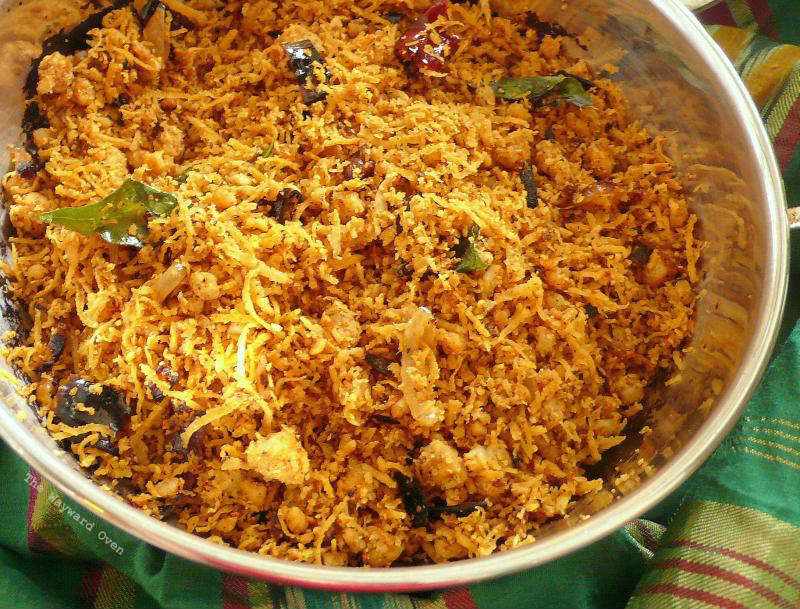
SRI LANKAN PRAWN VARAI 
I got this recipe from Mr S. Siluvairasu, the proprietor of the Yarl Beach Inn in Jaffna, Sri Lanka, when I stayed there in August 2003. I haven't cooked it much, which is a shame since it isn't difficult to do at all and is really delicious.
Actually what Mr Silu cooked when I was there (on a press assignment) was shark varai  (pronounced vah-ray) – flaked shark meat cooked with grated coconut and spices. Prawns are an alternative, and the dish can be eaten with rice, thosai or stringhoppers.
One of Mr Silu's other specialities that I enjoyed was baked crabs, also a well-known dish in Jaffna and another recipe that he gave me. That one takes a bit more preparation but it's also a really wonderful dish.

Mr Silu’s Prawn Varai

500g prawns, shelled and cleaned
150g grated coconut
2 tsp chilli powder
Pinch of turmeric powder
¼ tsp black pepper
½ tsp cumin powder
Salt to taste
3 shallots, sliced
3 dried chillies, soaked and cut into 1cm lengths
Leaves from 1 sprig of curry leaves
2 tbsp cooking oil

Steam the prawns until tender. Cool and chop finely (do not mince; you want little chunks).
Mix prawns with grated coconut, chilli powder, turmeric powder, black pepper, cumin powder and salt. Set aside.
Heat oil in a wok and fry the sliced shallots, dried chillies and curry leaves over medium heat until shallots are golden.
Add prawn mixture and fry, stirring constantly, until dry and coconut turns lightly golden. Adjust seasoning if necessary.

Ka'ach bilmalch make the rounds

Wednesday, April 3, 2013

KA'ACH BILMALCH GET A RINGING ENDORSEMENT 
Sometimes I make bread just for the sake of making bread. Sure, I eat it too but even while I am eating my way through one loaf, I start another because the breadmaking process is so appealing.
And then I end up with bits and bobs in the freezer. As I write this, I probably have enough bread to feed our two-person household for at least three weeks. There are half loaves of barley bread and pure levain country brown, a whole ciabatta, six sourdough tangzhong buns and a few slices of ... well, I have to admit, I don't know what bread those slices came from. In the fridge I found enough struan for about three bites and an eighth of an onion loaf. Tell me I don't bake too much bread.
So what am I doing making these little bread rings called ka'ach bilmalch?
Because ka'ach bilmalch is no ordinary bread that might only be eaten when I remember to take out the butter from the fridge to soften until it is spreadable. Ka'ach bilmalch is bread I could eat on its own in one sitting if I allowed myself to. There is never any ka'ach bilmalch left after two days.
(I say ka'ach bilmalch a lot, don't I? And I'm not even sure how to pronounce the name. Kaa-ash beel-malsh?)
Bread for sale, from Jerusalem
This is yet another recipe from the gorgeous Jerusalem by Yotam Ottolenghi and Sami Tamimi (I have the Ebury Press edition, with the beautiful cloth-bound cover). They introduce the savoury bread snack with a story of the family that makes it under the Abadi brand, which all Jerusalemites know so well that it's become the generic name for ka'ach bilmalch.
Although made with a yeast dough, ka'ach bilmalch are more cookie than bread. They're supposed to have a "pleasant crunch, hard crumble". Similar cookies can be found elsewhere in the Middle East and they remind me of the kahk or Iraqi bread bracelets I've made before.
This is off to YeastSpotting.
Simply moreish
Ka'ach Bilmalch
Makes 15-20. From Jerusalem by Yotam Ottolenghi and Sami Tamimi

250g all-purpose flour
½ tsp baking powder
¼ tsp salt
½ tsp instant yeast
½ tsp sugar
½ tsp ground cumin
¾ tbsp fennel seeds, toasted and lightly crushed
50g sunflower oil
50g butter, cubed and softened
50-60ml water, approximate
1 egg, for glaze
1 tsp black and white sesame seed mixture

Sift flour, baking powder and salt into a mixing bowl. Stir in yeast, sugar, cumin and fennel. Make a well in the centre and add oil. Stir to combine. Rub in butter. Gradually add water and mix to a soft dough. Knead until smooth, about two minutes. Form into a ball, cover and set aside for 10 minutes.
Place dough on a work surface and press into a rough rectangle. Using a bench scraper, cut dough into small portions (pic 1). Roll out each portion into a 12cm to 13cm rope and press ends together, overlapping slightly, to form a ring (pic 2). Place on a parchment-lined baking tray.
Brush rings with egg and sprinkle lightly with sesame seed mixture (pic 3). Cover and set aside for 30 minutes to rise (pic 4).
Meanwhile, preheat oven to 200°C. Bake rings for 20 to 22 minutes until puffed and top is golden. This next step is optional; I do this to get the crust lightly crisp without making the cookies too crunchy: Turn off the oven, prop open the oven door with a wooden spoon and leave the rings inside for about 10 minutes. Remove from the oven and cool completely before storing in an air-tight container. Eat ka'ach bilmalch on their own or serve with a dip.