The Oven has baked its last loaf. This blog is no longer being updated.

My cooking videos appear at youtube.com/janeragavan

I write on food at star2.com

A drink to get hooked on

Wednesday, May 19, 2010

Whether you have it by the pot...
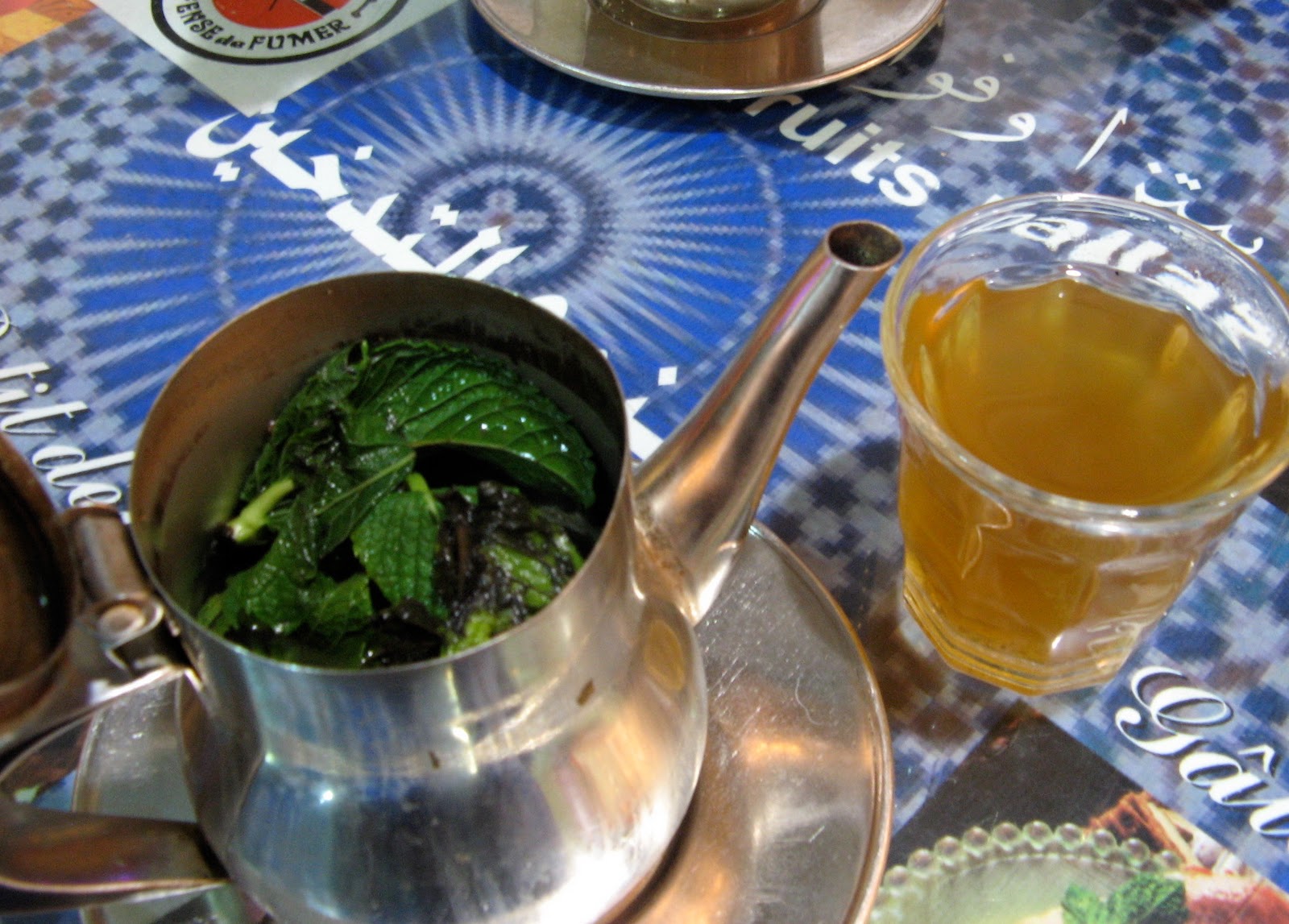
Mmmmm....

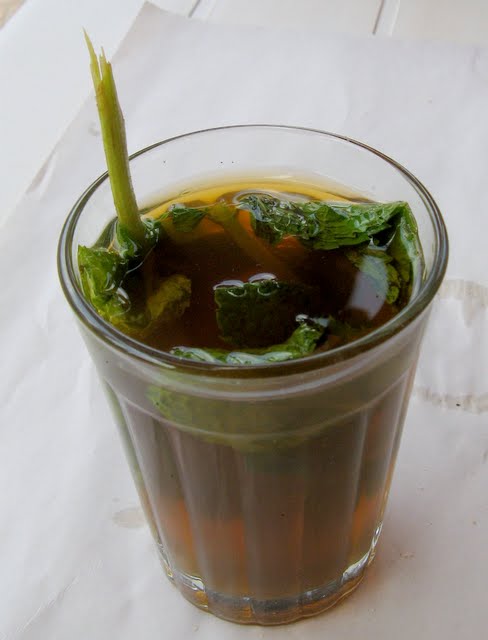
...or by the glass...
...mmmmmm...

...Moroccan mint tea is the perfect panacea for all ills.

I am not a tea drinker. Maybe some herbal or floral tea now and then, but green or black tea I only consume when I have an upset stomach. I wasn't keen on drinking thé à la menthe in Morocco initially; I thought, tea is tea, how good can this be? But I do love mint as a herb and it smelled good, so I gave it a try.

* * *
Hello everyone. My name is Marty and I am a mint tea addict.

The first time I was exposed to Moroccan whisky as it's called, the beverage was piping hot and I could only manage to wet my lips; that was all it took to put me on the path of eternal fixation. My brain was hijacked, my emotions running riot. I could not speak; all I could murmur was mmmmmmm and grin like Priscilla Presley's botched perpetual Joker face.

Thé à la menthe is tooth-gratingly sweet and heady, highly perfumed and the most comforting beverage I have ever drunk.

It has been almost 48 hours since my last real fix. Sure, I brought home a sack of dried mint-green tea mix and had a small brew earlier today, but it's not the same without the fresh herb or the authentic touch of the dada (Moroccan cook).

* * *
Latifa Bennani-Smirès writes in La Cuisine Marocaine that in Moroccan homes, the tea is usually made by the matriarch of the household. The taste of mint tea depends on the quality of the tea and mint leaves. She says the best mint comes from Meknès, in northern Morocco, which is strong and highly aromatic.

Mint tea is the beverage of rich and poor, and is served at all times of the day, for all occasions and "is offered with a smile, to a friend, parents, a travelling stranger... It is part of the legendary hospitality of Moroccans."

Here are Bennani-Smirès' instructions for making mint tea for guests:


  • Rinse a metal teapot or samovar (which holds about 750ml) out with boiling water. Put 2-3 teaspoons per person of green tea into the pot and fill with boiling water. Add lumps of sugar according to taste. After the tea has steeped slowly for a few minutes, stir it with a spoon, taste, appreciate and half-fill a glass. After the guest has tasted it and complimented you on the tea, it is time for the second pot of tea with the addition of mint.
  • Into the teapot, in which the first (plain) tea was brewed, push in a handful of mint leaves. Fill the pot with boiling water. Ensure that the mint leaves are submerged or they will not scald, cover the pot and let the tea steep slowly.
  • Then, stir vigorously with a spoon, bruising the mint. Serve after you have decided on the right proportions.
  • Alternatively, you can also infuse the tea with absinthe (wormwood) and for amateurs, other aromatic plants like verbena, marjoram and basil.
To serve the tea, hold the teapot at a height and pour it into the glass to create a bit of foam on the surface of the tea. This, however, should only be done by expert tea pourers. Amateurs are likely to burn themselves or waste tea by spilling it on the table.


I don't know about the diabetes rate in Morocco, but I do know that if you throw a dirham in any direction in the country, it is sure to hit at least one dental surgery and probably a dentist as well (there are a lot of lawyer's offices as well for some reason). Morocans take lots of sugar in their tea and coffee. Coffee comes unsweetened and you add sugar to taste, but as you can see from the recipe above, the mint tea is brewed with sugar and is served with more lumps of it. None of that "teh satu, kurang manis" over there. The thing is, the sweetness seems to enhance the taste of the mint tea or coffee (very good, thick French or Italian roasts).
Moroccans, especially the women, also love their sweets, and you can find a lot of patisseries selling French-style gateaux. These layer cakes are cut into small portions, usually 3cm x 6cm bars, and set out in neat rows in display cabinets. Western-style confectionery are usually huge puff pastry treats, while the smaller Moroccan sweets, many of them filled with almond paste, always attract not only those with a sweet tooth but also swarms of bees! (Unfortunately, I didn't get a good picture, sob...)

I left my heart...

Sunday, May 16, 2010

I heart Morocco
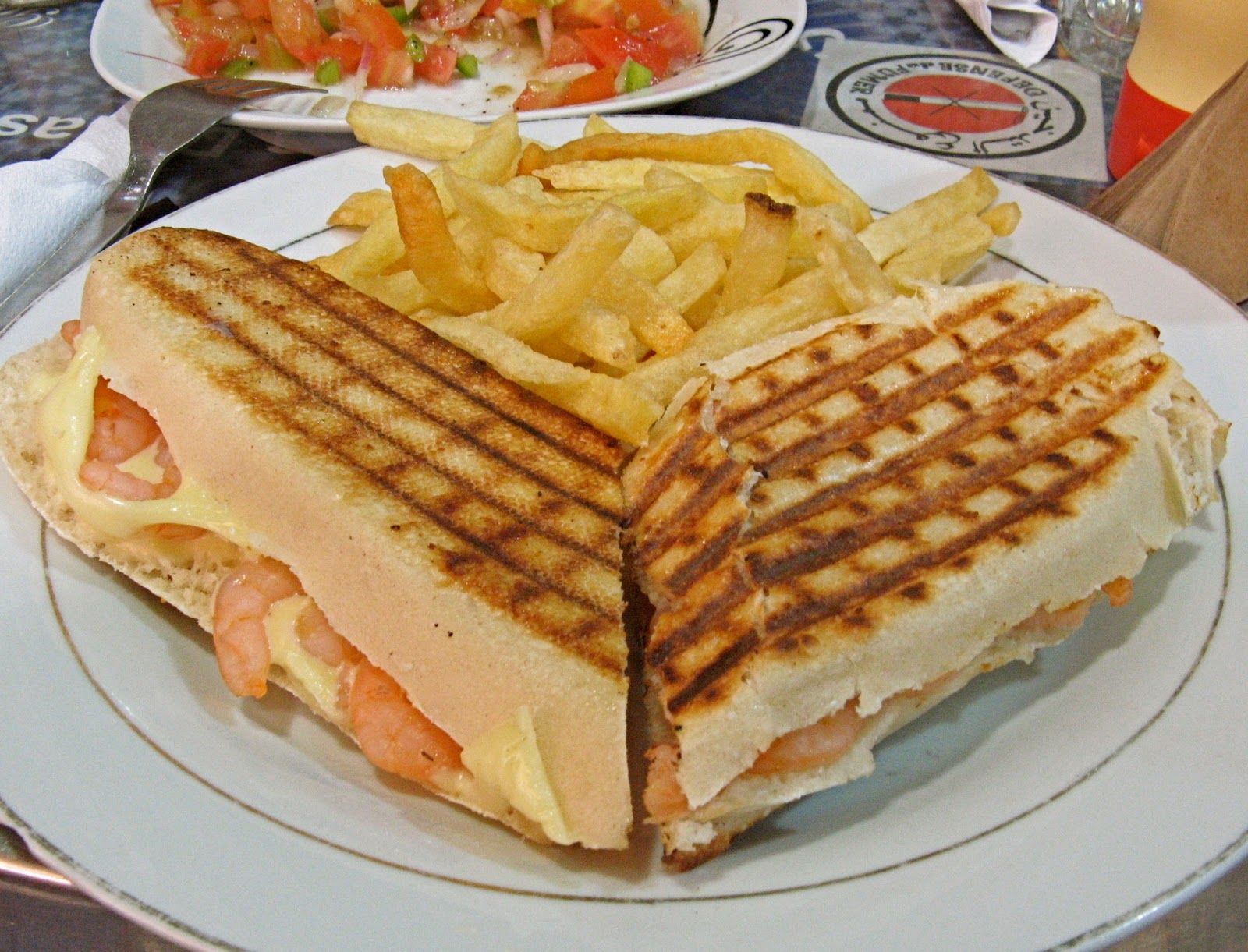
When the young man at the cafe along the Rue Bab Agnaou, a road just off the Djemaa el Fna square (for some reason, the place doesn't have a name) brought me my prawn panini and I traced its obvious outline with my fingers, he gave me a pat on the back and smiled quite affectionately. Not a come-on at all -- everyone's sandwich was plated the same way.

It's just one of the reasons I have fallen in love with Morocco.

I leave this country tomorrow. It's been an amazing visit to Casablanca and Marrakech, one filled with loads of wandering about and sight-seeing, quite a bit of shopping and copious amounts of eating (all of which I have documented!). When I get home, there will be more on Moroccan food to write about and many recipes to try. These are just a few of my culinary memories.

The Hanging Gardens
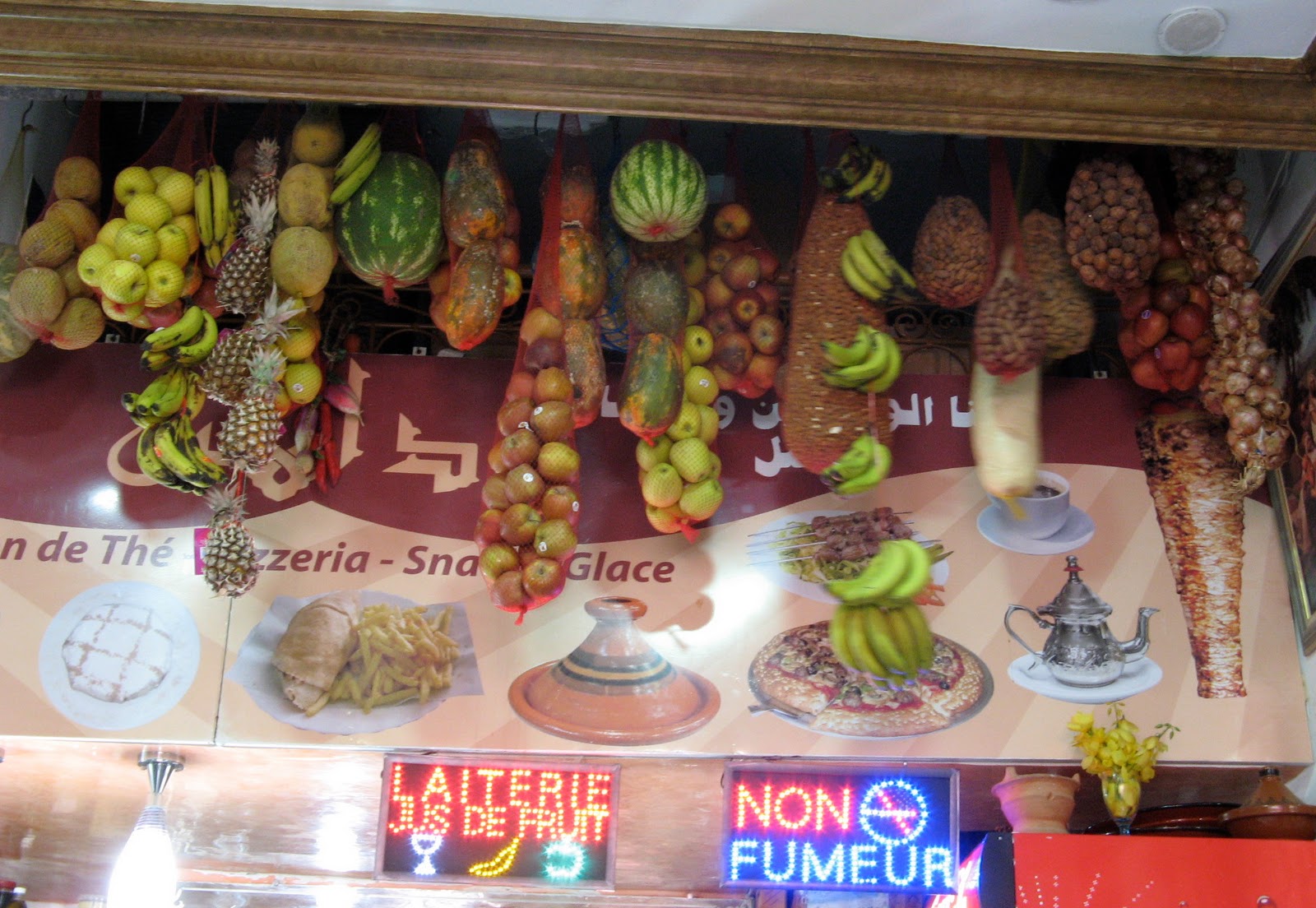
Hanging up fruit, nuts and vegetables from the rafters is a common way to store the items
Hanging up fruit, vegetables and bags of nuts from the rafters of is a common way to store the items. This picture was taken at the same cafe where I had the sandwich above. For some reason, the cafe doesn't have a name. Just look for the one on left as you stand in front of the doorway to Ryad Omar. The servers there are very sweet and the food -- quick kebabs, wraps and sandwiches -- is simple and very good. The prawn panini was simply some little prawns, or crevettes as they're called in French, and mayonnaise in a bun cooked in a panini grill. Delicious!

Finger Food
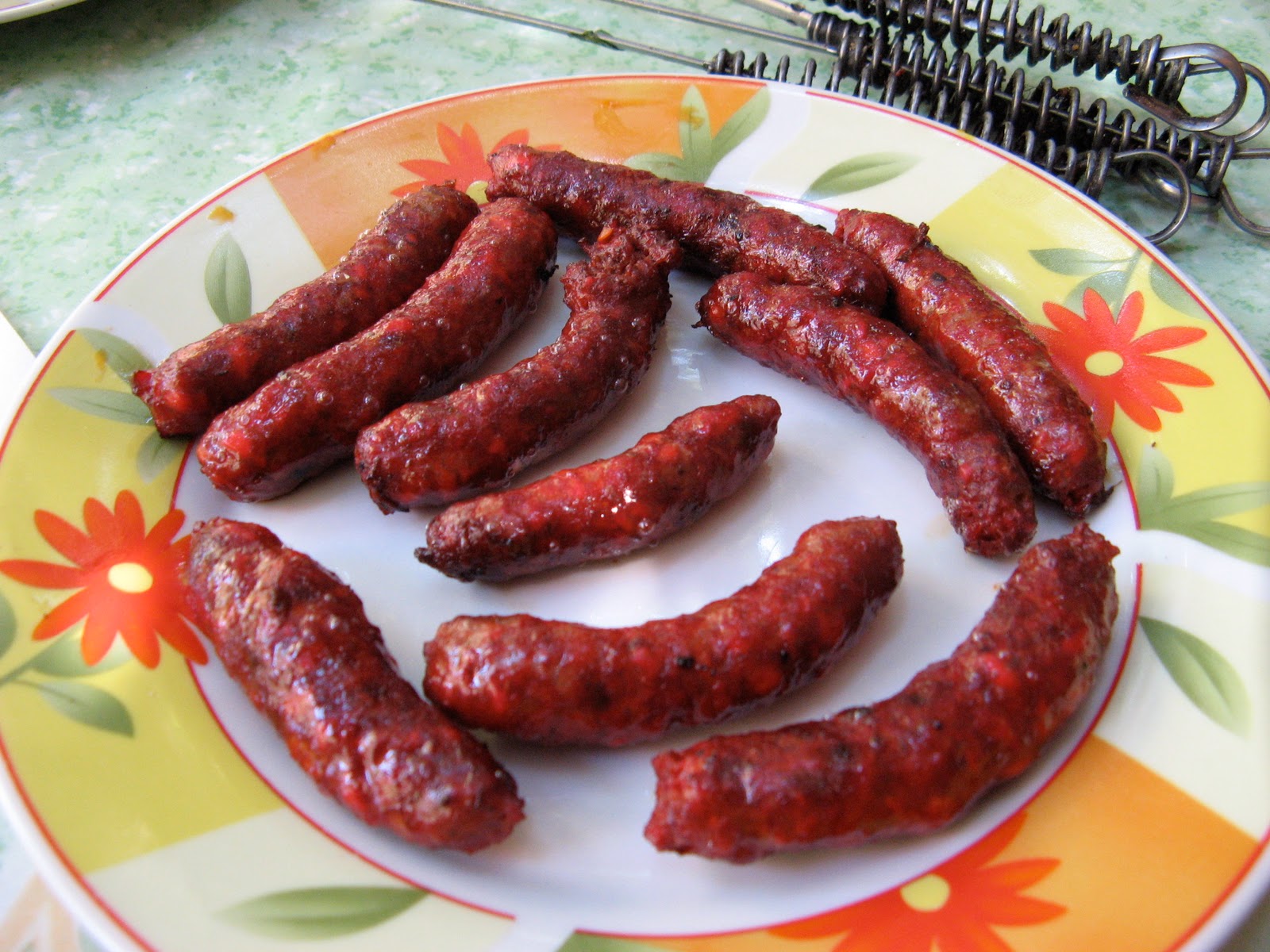
Good to eat with your fingers... or did these come off actual hands?
Merguez sausages contain lamb, sometimes also beef, and spices like paprika, harissa and red chilli paste which give its red colour. These fingerling sausages are eaten as a snack on their own, stuffed into a bread roll, or cooked together with couscous or in a stew. We had these sitting under the trees on the pavement outside a little shop that was obviously where locals ate -- no pretension or fancy decor. They were grilled by a sweet, soft-spoken young woman who had probably never had Asian customers before.

Do The Twist
Puff pastry twist, sprinkled with a lot of sugar
This pastry stick was slightly stale and looked sad along with two other pieces in the display cabinet at one of the cafes in Casablanca, but I couldn't resist getting it because it's so appealing. Look at it! Doesn't that just call to you?

Lend Me Your Ears
Corn with monster-sized kernels
These corn on the cob stopped me in my tracks. They were only about three to four inches long but the kernels were as big as hazelnuts! A vendor was boiling them in a large pot and when you asked for one -- or did as the locals and select the one you wanted yourself -- he would put it in a piece of paper and season it with lashings of coarse salt by actually throwing the salt at it. The taste and texture reminded me of corn from my childhood -- the kernels were sweet and firm on the outside but soft with a bite. Best jagung ever!

Not your garden variety soup

Thursday, May 13, 2010

If snails make you squeamish, turn away now...
Enjoying escargot at the Djemaa el Fna in Marrakech
Oops, too late.

Right, if you're still with me, let me tell you this: forget those creepy crawlies in your garden (they don't bite anyway; shame on you!) and imagine a succulent, slightly chewy meat cooked in a flavourful spiced broth and you have snail soup at the famous Djemaa el Fna in Marrakech.

A number of identical stalls sells the soup at the square, with a friendly looking man behind a huge steaming vat. The aroma alone will draw in the crowd. Adventurous eaters will sit down at the few benches around each stall, while curious onlookers will talk among themselves as they wonder if they're game enough to try the delicacy.

The soup comes in 5 or 10 dirham portions (RM1.80-RM3.60; the picture is of the more "expensive" bowl). You poke in a toothpick and spear the snail to fish it out of its shell. Whatever liquid is left in the shell, you tip into your mouth or pour back into the bowl and then after you're done with the meat, you drink up the remaining broth.

Here's a recipe I found online for snail soup. The broth, seasoned with spices like thyme and wild mint, is cooked for a couple of hours and you really can taste all that loveliness.

These gastropod are not cooked like the French escargot, where the snails are boiled, the meat taken out of the shell, cleaned, put back into its shell and cooked with a butter sauce or another way. After the Moroccan snails are cleaned in their shells, they are cooked in the broth and eaten. I'll let you make whatever you want of that bit of information.

Mr NoTime and I ate them two days ago and we're still standing.