The Oven has baked its last loaf. This blog is no longer being updated.

My cooking videos appear at youtube.com/janeragavan

I write on food at star2.com

Seedy and cereal-ised

Thursday, August 12, 2010

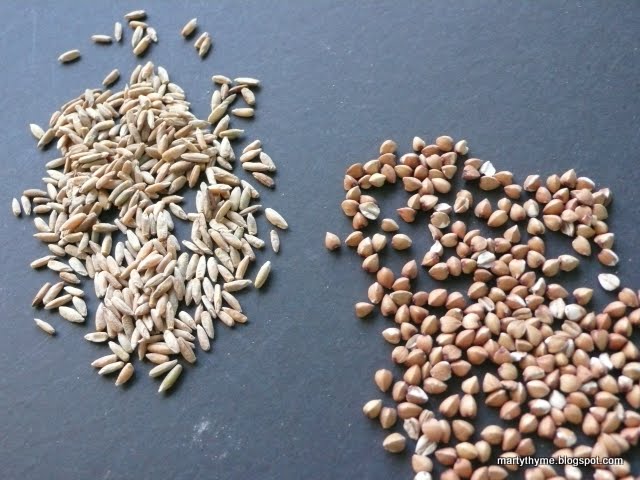
Rye grains (left) and buckwheat
The buckwheat grains may have turned my head but the rye didn't get a second glance. How wrong I was to dismiss something for the way it looks.

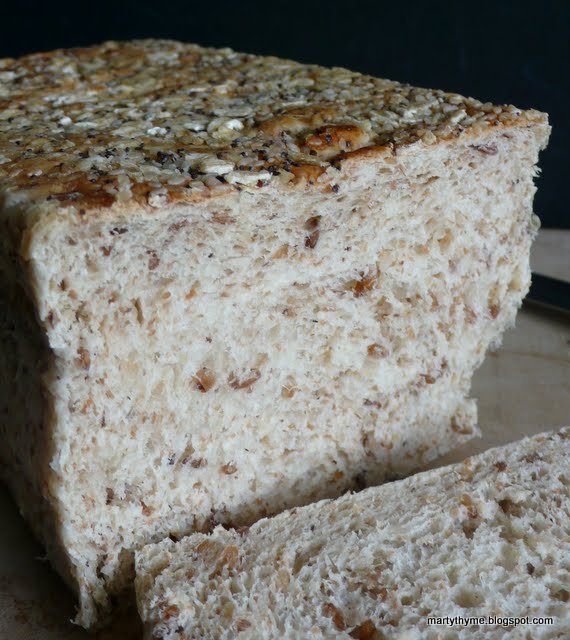
No, they certainly didn't look like much, but look at what they did for this bread. They turned it into a hearty and healthy loaf ­­– one hunky toasted slice with a spread of Marmite made me a good breakfast.
Cracklin'
I was mistaken that buckwheat was a grain cereal. Actually it's a fruit seed and is ideal for those allergic to the gluten in wheat. (A bit more on buckwheat here.)

Rye, as we're probably aware, is a type of grass. Bread made from rye flour is dense and delicious, but I'm not always successful with it. By adding just the grain to bread dough, I still get the health benefits and of course, there's the nice texture and chewiness from the grains.

I think it's important to toast the rye and buckwheat before cooking as that gives them a better flavour. A topping of seeds and rolled oats gives the bread a lovely crunch as well. I shaped this loaf in a Pullman loaf pan (right) and that's why the top is flat.

In the Malaysian climate, this bread will be good only for a day if kept outside the fridge even in an air-tight container.

I am submitting this to YeastSpotting.

MULTI-GRAIN BREAD
Makes 1 loaf

¼ cup (50g) buckwheat
¼ cup (50g) rye grain
2¼ cup (335g) bread flour
½ cup (80g) wholemeal flour
¼ cup (40g) milk powder
2 teaspoons salt
2 tablespoons honey
30g butter, melted
3 teaspoons (10g) instant dry yeast
About 1 cup (250ml) warm water

Topping
1 egg yolk
1 teaspoon milk
1 teaspoons sesame seed
½ teaspoon blue poppy seeds
1 tablespoon sunflower seeds
1 tablespoon rolled oats
  • Toast buckwheat and rye grain separately in a dry pan over medium heat. Place both grains in a saucepan and pour in 1½ cups of water. Bring to the boil and simmer until grains are soft, 10-15 minutes. Drain and cool.
  • Sift flours, milk powder and salt into the bowl of an electric mixer attached with a dough hook.* Mix in honey and melted butter. Add yeast and cooked grains. Turn on mixer on low and gradually add warm water to form a soft, wet dough. Cover the bowl and allow dough to rest for 10 minutes. 
  • After resting time, knead on medium for 7-10 minutes until dough is smooth and elastic. The dough will still be a little sticky; use greased hands to remove it from the bowl and form into a round ball. Grease the bowl and return the dough to the bowl. Cover and stand in a warm place until dough has doubled in size.
* Alternatively, this process can be done by hand, mixing the dry and wet ingredients with a wooden spoon, then kneading on a lightly floured surface.
  • Punch down dough and knead until smooth. Form into a ball and rest for 5 minutes. Shape dough into a rectangle with the shorter side nearest to you. Fold the top third into the middle and then the bottom third over that like a letter. Pinch seams together and place dough, seam side down, into a greased 11cm by 20cm loaf pan. (Or, form the dough into your preferred shape and place on a greased baking tray.) Cover and stand in a warm place until risen. Preheat oven at 200°C 30 minutes before baking time.
  • Brush dough with combined egg yolk and milk; sprinkle evenly with combined seeds and oats for topping.** Bake about 45 minutes.
** Use any seed or grain you like.

PRINTABLE RECIPE

Live Ade

Thursday, August 5, 2010

Double, double toil and trouble;
Fire burn and cauldron bubble.
This ginger beer is from Nigel Slater's Classic Ginger Beer recipe which appeared in The Observer. I didn't think you could make fizzy drinks from scratch at home, and was pleasantly surprised to see the bubbles. It happened a couple of days after it was brewed and the source of the effervescence is yeast, an ingredient I never thought would be used in making ginger beer.

What I didn't reckon on was the alcoholic content in this homemade brew!

But of course! I make bread, I should have realised that yeast reacts with sugar and creates carbon dioxide and alcohol. No wonder I felt woozy after gulping down a whole glass, expecting it to be just like any other refreshing fruitade.

It's not potently alcoholic, but for someone who hardly imbibes, it went straight to my head.

In Toast, Nigel Slater talks about waiting for the man who sells pop and that his second favourite drink is cream soda. I can't remember if he mentions ginger beer in his memoir, but if cream soda is like drinking a sponge cake, as he says, this ginger beer is like drinking Asia ­­– ginger, lemongrass, cloves...

This recipe does not involve toil and trouble or burning fires under cauldrons: Place lemons, fresh ginger, cloves, cream of tartar and sugar in a large bowl; pour in boiling water. Wait till the mixture cools down enough to add the dried yeast. Leave overnight before straining and bottling. Allow to mature for two or three days.

Mr Slater suggests the option of adding lemongrass, which I did. That gave it an extra level of tang. He didn't say to squeeze the lemons before straining, but I did that too. The result was a lemony flavour together with the ginger and lemongrass. I won't do that next time ­­– the taste of ginger should dominate.

One addition that I think is necessary is salt. Pour yourself a glass of ginger beer and add a pinch of salt to it ­­– it's subtle but I think you will be able to appreciate the difference in taste. There are people who like to add a pinch of salt to their Coke, swearing that this makes the drink fizzier. I just think salt, even a small amount, makes anything taste good. My mother doesn't call me Salty Mama for nothing.

Something's fishy going on

Tuesday, August 3, 2010

Clockwise from top left: The whole can; the open can - looks like leather;
Can we eat this?
Fried dace in a can is one of those things, like raw streaky bacon, that may not look very appetising but is a good example of not judging a book by its cover.

Yaki onigiri with fried dace
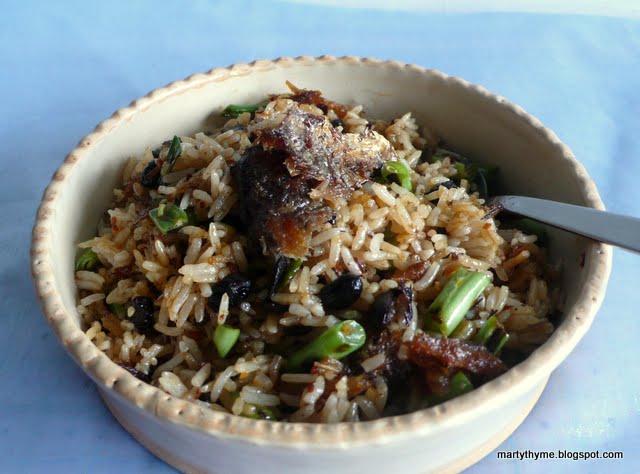
I made yaki onigiri (grilled crusty sushi patties) with fried dace for the August Don't Call Me Chef (unfortunately, something's wrong with the pdf file, so here's the link to a temporary docx file) challenge using canned food. I had earlier made some fried rice with French beans with half of the dace and ate it all in one meal!
Fried rice with tinned dace and French beans
This month, my co-producers Veggie Chick, Hungry Caterpillar and I decided to ask some bloggers about their favourite canned food. I invited my sister The Kitchen Boss who likes to use canned tuna and has a delicious looking recipe for Simple Skinny Tuna Salad, and Jeannie, whom I have only communicated with through our respective blogs before – she did a fantastic job with her Sardine Calzone.

Me, I have had quite a bit of writing to do that I wasn't up to trying other dishes containing canned food. Sorry...